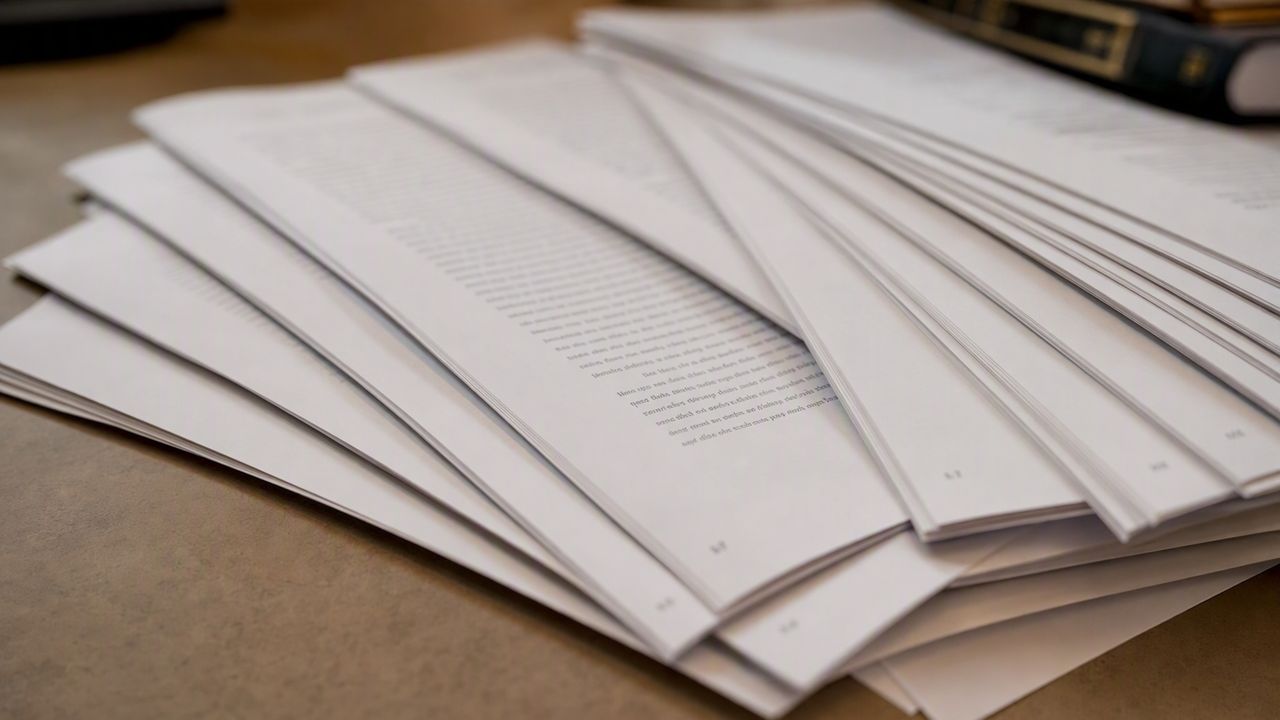
A Bates number is a unique identifier stamped on the pages of a document production. It is called that because Edwin Bates invented the mechanical stamping device in the 1890s, but the number today is not a physical stamp: it is a small printed label, almost always in the bottom margin, that runs in sequence from the first page of a set to the last.
In litigation, the number is the address of a document. "See the third page of exhibit D" is a vague instruction. "See DEF-000123" is precise. Every party in the case, every e-discovery review platform, and every copy service in between can find DEF-000123 without anyone having to describe what is on that page.
What it looks like
A Bates number is a prefix, a sequence, and sometimes a suffix. DEF-000123 has a prefix DEF-, six padded digits, and no suffix. The padding is what keeps numbers sortable: DEF-000123 sorts before DEF-001230 the way text sorts, and that matters because production software compares numbers as text more often than as integers.
The prefix usually names the producing party or the case. The sequence runs continuously across the whole set — that is the defining feature. A production is one ordered collection, and the numbering proves the order.
Why it still matters
You might think modern review software has made the physical number obsolete. It has not. A court order still says "the parties shall produce documents bearing consecutive numbers." A protective order still references numbers when it asks you to file privileged material under seal. And the receiving side still runs QC against the numbering to make sure nothing is missing, duplicated, or out of order.
Not legal advice. Whether a numbering scheme or a production practice satisfies your court, protective order, or production agreement is yours to confirm.