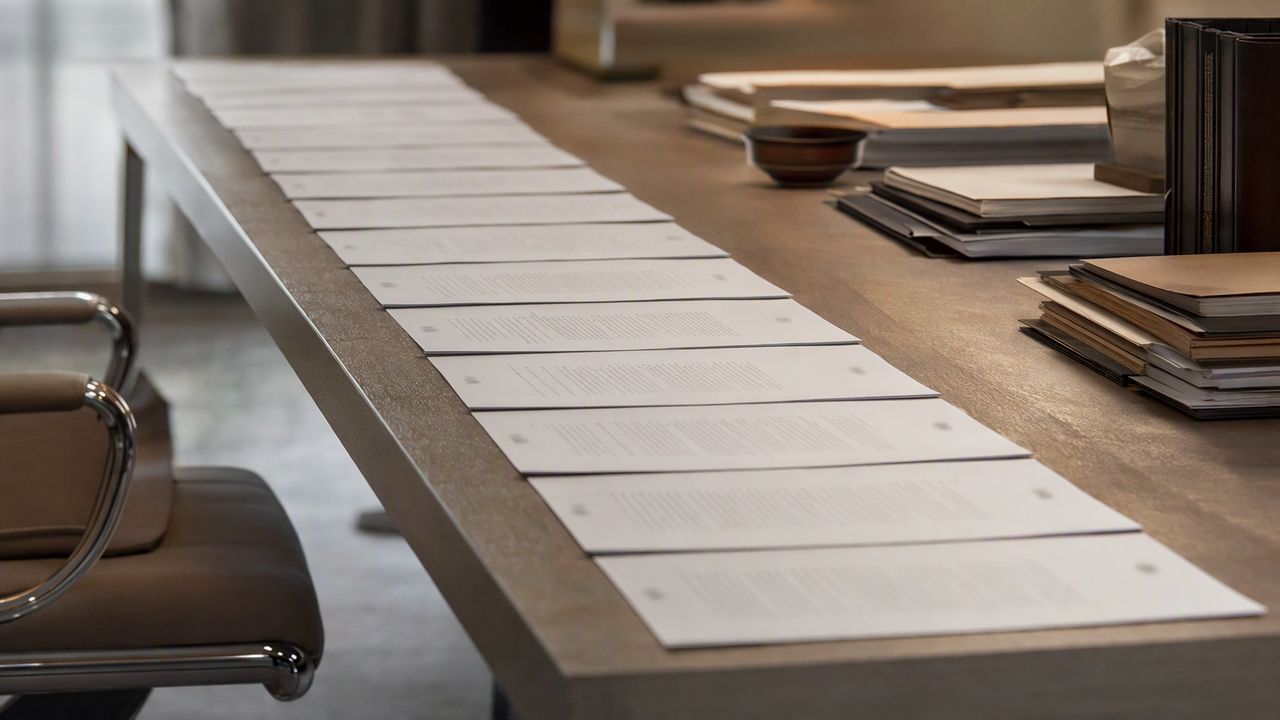
Every production tool asks this question eventually, and the answer determines whether your numbering survives QC. Continuous numbering runs one sequence across every file in the set, in the order you arranged it. Per-file numbering restarts at 000001 for each new document.
What continuous numbering gives you
A continuous sequence is a proof of completeness. When the set is numbered DEF-000001 through DEF-004500, a gap or a duplicate is immediately visible, because the numbers themselves form the checklist. That is why courts and receiving parties expect it: the numbering and the inventory are the same thing.
It also makes citations stable. If you add a document mid-set later, the numbering shifts — which is why the conventional workflow allocates the final numbers only at the very end, after the order is fixed.
When per-file numbering is right
Per-file numbering has one honest use: when each file is its own exhibit and its internal page order is the only thing anyone will cite. A single 12-page exhibit stamped DEF-000001 to DEF-000012 is easy to read. The trouble starts when the set is more than one file and a reviewer asks "where is exhibit D?" — without a continuous sequence there is no answer that is one number long.
The safest default for production work is continuous. If you genuinely need per-file, make it a deliberate choice for that matter, not a habit.
Not legal advice. Whether a numbering scheme or a production practice satisfies your court, protective order, or production agreement is yours to confirm.